Skip to content
Colorado · Dissociation · Observation sources

PSD Letters for Dissociative Disorders in Colorado

Prepare a Colorado PSD request involving dissociative symptoms by separating your recollection, another person’s observations and what remains unknown. Describe the dog’s established response and its limits without claiming it diagnoses or prevents every episode.

Known observations
Reported information
Explicit uncertainty
Keep the source with the observation
  1. What you remember
  2. What someone reports
  3. What remains unknown

These are different parts of an honest clinical account.

A careful observation record

Describe the effect without deciding its cause

Describe the functional effects relevant to the request without assuming that every dissociative experience has the same cause or meaning. Discuss the history privately with a qualified clinician.

For this inquiry, a useful record distinguishes an event you remember, an observation supplied by someone else and an interpretation that remains uncertain.

Record the cue, response and outcome separately

One observation, three entries

  1. Situation or cue

    What was happening before the dog responded, and who observed it?

  2. Learned action

    What did the dog do, rather than what do you think the behavior proves?

  3. What followed

    What changed, what did not change and what other support was used?

Mark an unknown as unknown.A gap in the account is a question for discussion, not a reason to invent the missing sequence.
People walking a dog across a grassy park
☺ Lee J Haywood, CC BY-SA 2.0
Photo detailsA family walking. Resized and converted to WebP; displayed with responsive cropping.

Bring both the useful response and the missed one

With appropriate clinical guidance, explain the situation, the trained action, and the person’s response. Do not make a universal claim about grounding or awareness based on one helpful interaction.

  • The activity affected by the symptoms
  • The cue and trained response actually observed
  • What support is available if the response does not occur

Leave room in the plan for an unavailable dog

A task record should include both successful responses and situations in which support was insufficient. Human backup and a suitable care plan remain necessary considerations.

Identify a human contact
Clarify who knows the support arrangement and how to reach them.
Consider the animal's care
Work out who handles routine needs if the usual handler cannot do so.
Take uncertainty to the clinician
Explain gaps in the record instead of filling them with assumptions about detection.

Describe behavior without turning it into a diagnosis

A dog's behavior cannot establish a dissociative diagnosis or guarantee that every episode will be detected. Document a learned response as behavior, including occasions when it is unavailable or unreliable. A useful account makes those limits visible instead of treating a letter as a safety guarantee.

Interior of Denver airport terminal beneath its white fabric roof
Sunnya343, CC BY-SA 4.0
Photo detailsJeppesen Terminal at DEN Airport, south view, Aug 2014.jpg. Resized and converted to WebP; displayed with responsive cropping.
Keep the private history in its proper channel

Share sensitive episode history through the clinical process. Training discussions should identify observable cues and actions without treating a dog’s behavior as a diagnosis.

When recollections do not line up

Simple, Transparent Pricing for Colorado Dissociation Documentation

Review the assessment scope and any questions about follow-up before making a purchase. A documentation service does not replace diagnostic care or a support plan for times when the dog does not respond. Choose based on the request you can accurately describe today.

ESA Housing Letter For One Pet

$149.00

24-48 Hour

  • ESA Documentation
  • Licensed Professional Review
  • 24-48 Hour Processing
  • Valid for 1 Year
  • Digital Copy
  • Renewal Reminders
  • Email Support
Get Started

PSA Letter

$199.00

24-48 Hour

  • PSD Documentation
  • Licensed Professional Review
  • 24-48 Hour Processing
  • Valid for 1 Year
  • Digital Copy
  • Renewal Reminders
  • Priority Phone & Email Support
Get Started

Bundle Packages

Bundle

ESA Letter + Certificate Bundle

$199.00

24-48 Hour

  • ESA Documentation
  • ESA Certificate
  • Licensed Professional Review
  • 24-48 Hour Processing
  • Digital Copies
  • Priority Phone & Email Support
Get This Bundle
Bundle

PSD Letter + Certificate + ID Card

$225.00

24-48 Hour

  • PSD Documentation
  • PSD Certificate
  • PSD ID Card
  • Licensed Professional Review
  • 24-48 Hour Processing
  • Digital Copies Only
  • Priority Phone & Email Support
Get This Bundle
Clinical assessment Secure checkout Current catalog prices

Colorado Service Animals does not offer an ESA registry. A professional evaluation determines whether documentation is appropriate; optional cards and certificates do not establish access rights.

An individual documentation assessment

Begin a review with the observations you can support

You do not need to fill a memory gap to submit a truthful inquiry. Identify the source of each observation and let the clinician ask for the detail relevant to a decision.

01 Start the private screening
Describe the difficulty, the trained response and any part of the sequence you cannot establish.
02 Complete the Colorado assessment
The licensed clinician considers the individual request and discusses uncertainty where further information is necessary.
03 Check the emailed outcome
When a letter is clinically approved, receive the digital document by email and review it for accurate details.
Free Screening
  • Attributed observations
  • Uncertainty acknowledged
  • Clinician-led outcome

Verify the professional named for your Colorado review

An observation record and a clinician's credential answer different questions. Before a remote assessment, ask for the professional's name and license information.

Open Colorado's professional license lookup
Match the individual
Compare the identifying details supplied by the service with the record returned by the state search.
Read what the record establishes
License verification is a credential check. It does not promise that your application will be approved or that a particular animal response is suitable.

Dissociation-related limits worth asking about

Can a PSD guarantee that a dissociative episode will not occur?

No. Such a guarantee would be inappropriate. The assessment concerns an individual assistance role and its limitations, not certainty about future symptoms.

Can a dog’s behavior diagnose a dissociative disorder?

No. Diagnosis belongs to qualified clinicians. Describe the dog’s learned response as behavior, not as proof of a particular condition.

Should I include episodes in which the dog did not respond?

Yes. Reliability and limitations matter to the practical assessment. Explain other support arrangements rather than assuming the animal will always detect or resolve a difficulty.

What if someone else witnessed the response?

Identify the observation as coming from that person and describe its context. Tell the clinician where your own recollection is incomplete instead of presenting every detail as firsthand knowledge.

Can I write that I do not remember what happened after the cue?

Yes. State the limit of your recollection and identify any additional account as reported by its observer. The clinician can decide what clarification is needed without a reconstructed story being presented as fact.

Will a letter confirm that the dog detects every dissociative event?

A documentation decision does not verify a universal detection ability. Describe established training and missed responses accurately, and address reliability questions with the relevant professional.

Use follow-up questions to clarify uncertainty

If the evaluator asks about safety or reliability, include missed responses and backup support. A complete account is more useful than describing the dog as an infallible safeguard.

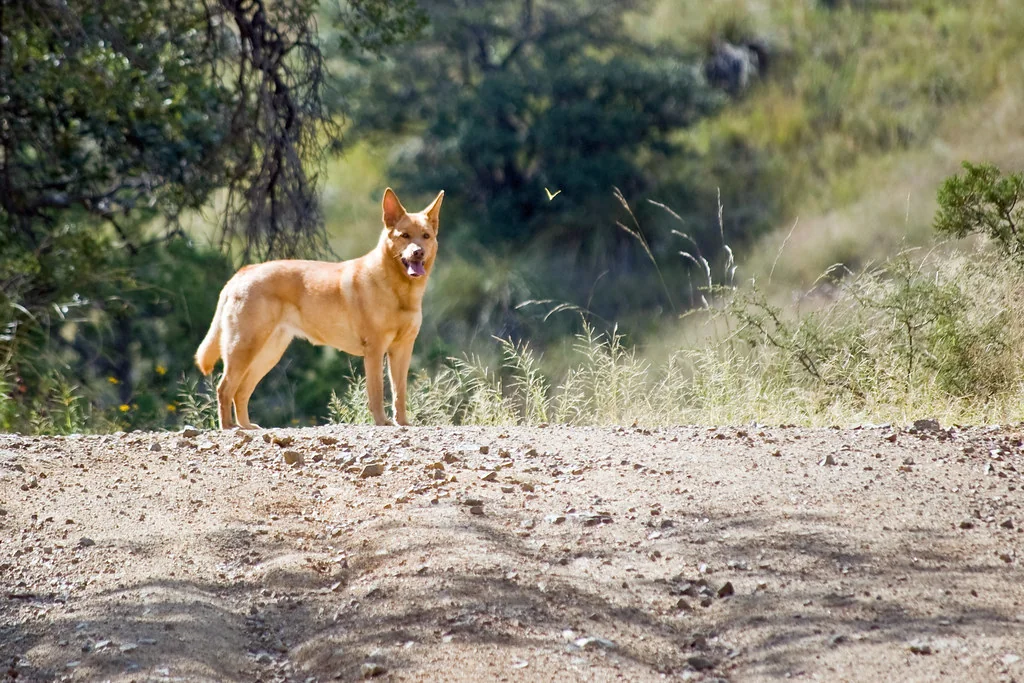
Tan dog standing on a dry trail beside shrubs
desertdutchman, CC BY 2.0
Photo detailsDesert Dog Looking for Trouble. Resized and converted to WebP; displayed with responsive cropping.
Sources and review date: October 12, 2026

Colorado dissociation-related application information, reviewed October 2026, not medical advice or legal advice. Confirm current procedures with the relevant local authority because rules may change. A completed observation record cannot guarantee approval or a safe response in every setting. CSA has no authority to speak on behalf of government offices or housing associations considering a dissociation-related application. For confidential crisis help, contact 988 .

This planning guide cannot determine the cause of an episode or replace a clinician's assessment of support and safety needs.

Include the response that did not happen as well as the one that did

A useful dissociation-related account acknowledges uncertainty and unsuccessful responses. Explain the trained action without presenting the animal as an infallible safeguard.

Missed responses included
Sources identified
Support beyond dogs